Case study · Platform · October 2026
AfterHours
The whole night out, planned in one place.
AfterHours books a night out for a group: a hosted route through four venues, a pass for every guest, a group chat that translates, and a driver on standby between stops. It serves four kinds of user at once (guests, hosts, venues and drivers) plus an admin console, and it is live in ten cities. I designed it on my own and built it with Claude Code on Base44 for the Contra x Base44 challenge, then kept shipping for three weeks after the deadline.
- What I owned
- All of it, on my own: the research (two months in Manila, Bangkok and Bali), then product, UX, visual design, data and QA for four kinds of user (guests, hosts, venues and drivers) plus an admin console. I directed the build with Claude Code and shipped it.
- What changed because of me
- A night out that ran on group chats and guesswork became one booking: a hosted route, a pass for every guest, a chat that translates and a driver on standby. I ran two security reviews and a button-by-button QA pass, which took it from a deadline build to a product I kept shipping for three more weeks.
- By how much
- Live in 10 cities and 17 languages, with 5,300 real venues and 855 events. Anonymous reads of driver and host emails went from 21 and 20 records to none. All ten issues from the second security review were fixed the same day, and the QA pass covered 47 routes and 35 functions.
- Role
- Solo. Product, UX, visual design, data and QA. I directed the build and shipped it.
- When
- 20 to 25 October 2026 for the deadline, then three more weeks of releases.
- Tools
- Claude Code on Base44. Venue and event data from OpenStreetMap, Resident Advisor and Eventbrite.
- Live in
- 10 cities and 17 languages.
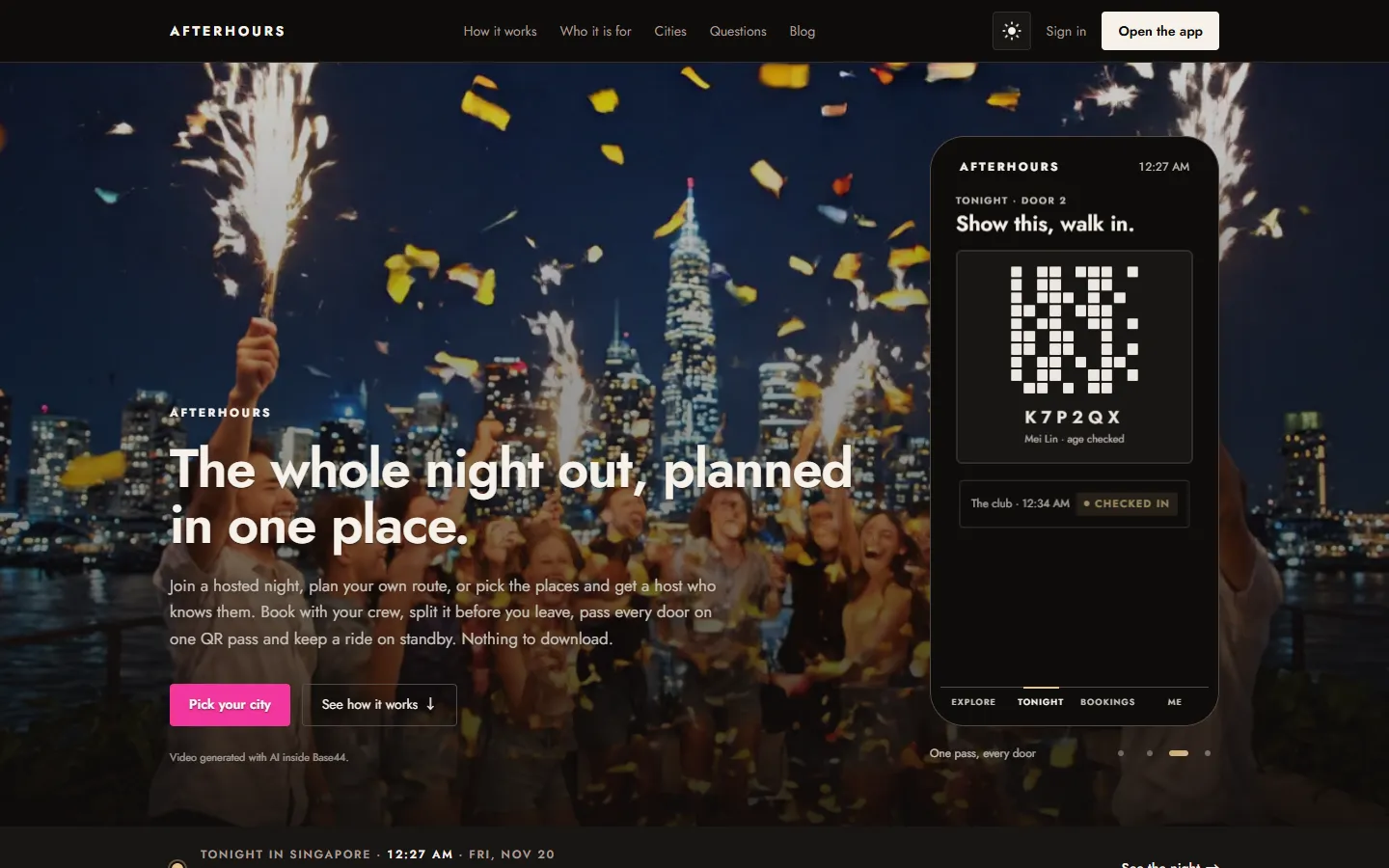
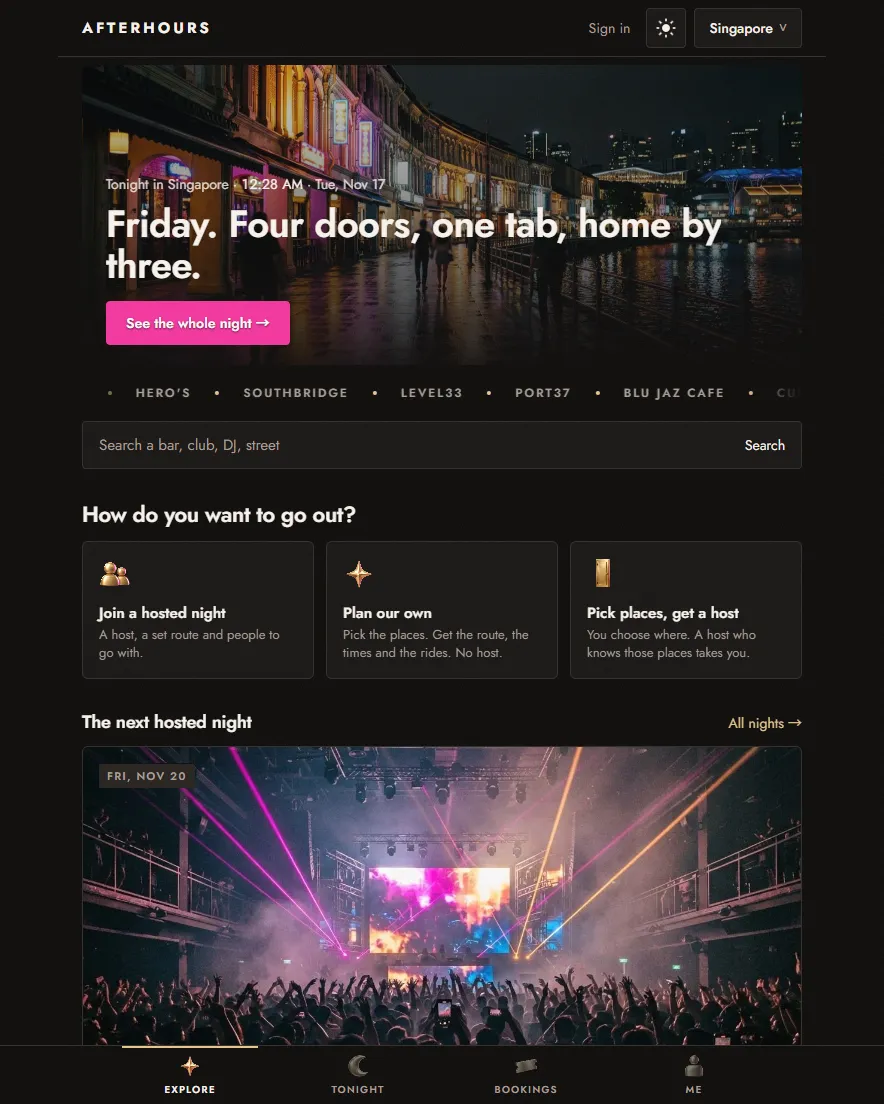
The landing page on desktop.
The problem
A night out runs on group chats and guesswork.
Visitors to a city cannot tell which places suit them, how long the queue is, what the door wants, whether the whole group will get in, or how they will get home. The hosts who run nights for them work out of scattered chats and spreadsheets. Venues cannot tell which group came from where.
So I designed one night, seen from four sides.
- 01GuestsThe route, the doors, the bag, the ride and the way home, all settled before the second drink.
- 02HostsRoster, check-in, ride requests and bag custody on one screen. Guests pay their share to the host.
- 03VenuesA door list with age flags, tables already sold and bottle pre-orders.
- 04DriversStandby near a route. Each request shows pickup, drop-off and group size, and a PIN confirms the pickup.
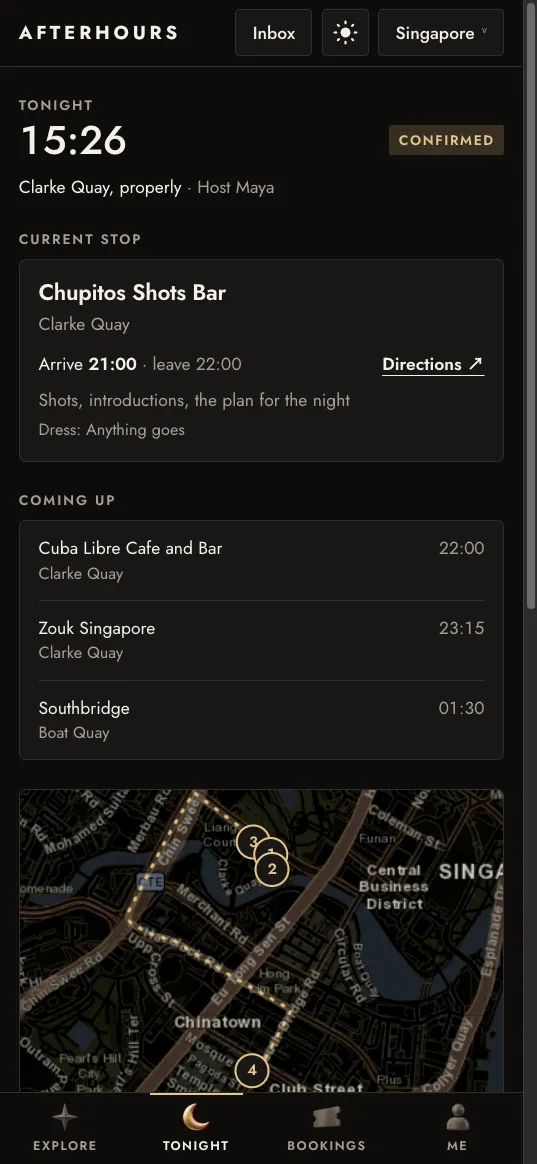
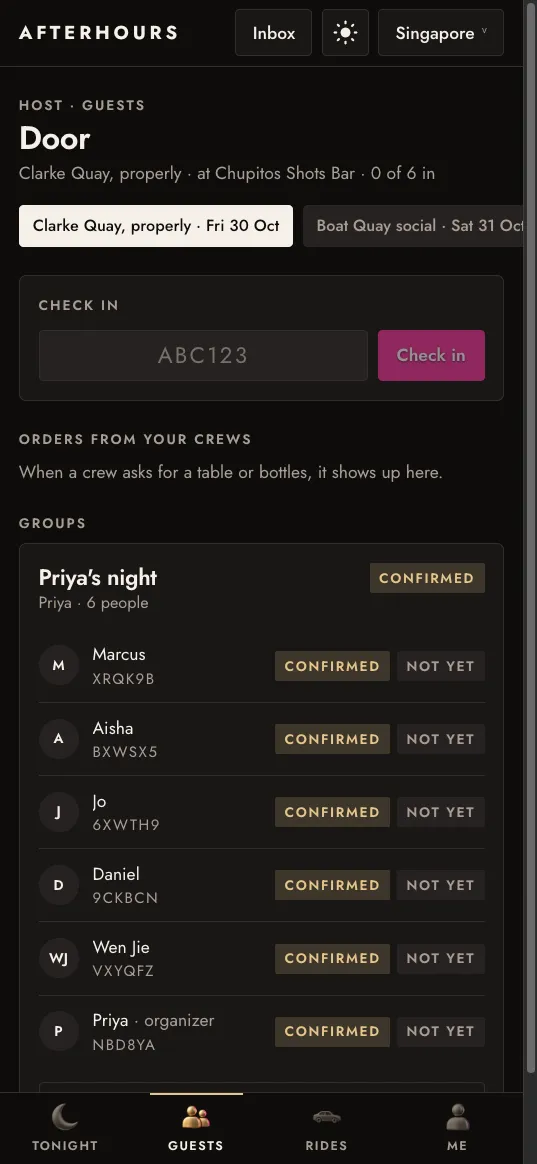
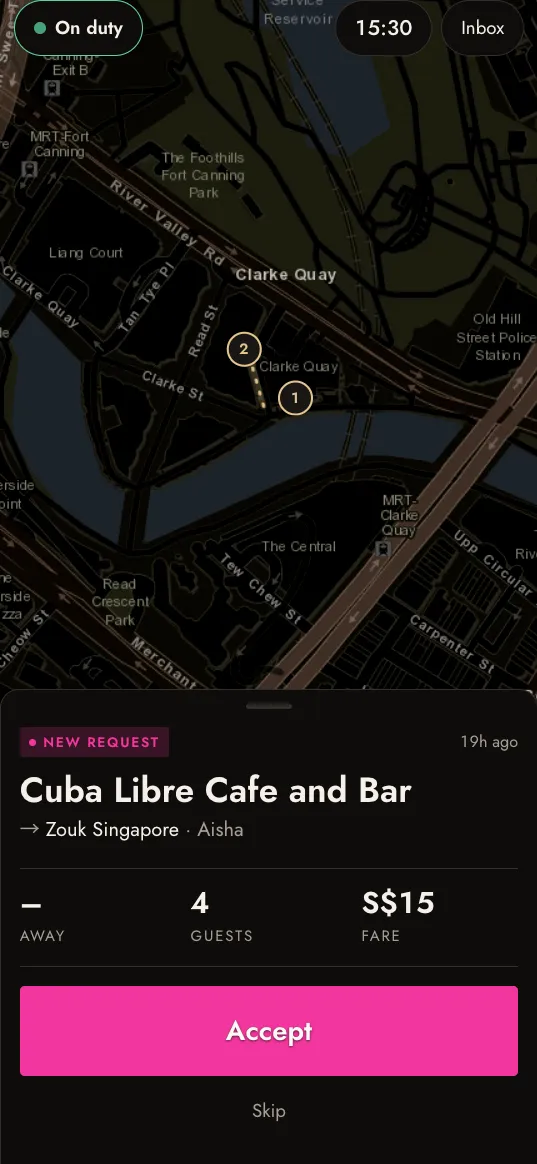
Behind all four sits an admin console for each city: partner approvals, safety cases, money and cities.
Role and constraints
Five days to a live product, judged on design.
I did all of it on my own: the flows, the design system, every screen, the data sources and the testing. I built it with Claude Code on Base44, directing every feature, and every product and design call was mine.
- 01The deadlineThe challenge closed at 11:59pm Pacific on 25 October. The first commit was on 20 October.
- 02The rulesA live, published app, fully designed and responsive, plus a walkthrough video. Judged on design quality, automation depth and the story.
- 03No new packagesOnly what the platform ships with. No extra libraries.
- 04Real dataEvery venue and event in every city comes from a real source, not a placeholder.
- 05A scene I knowSingapore is the live demo city because it is where I live. I did not want to design for a scene that is not mine.
Process
From a hundred screens to eighteen.
My first Figma pass was a sitemap wearing phone frames: about a hundred placeholder screens that described the product and designed none of it. I cut the plan to about 18 screens that carry a night from start to finish, and designed those properly.
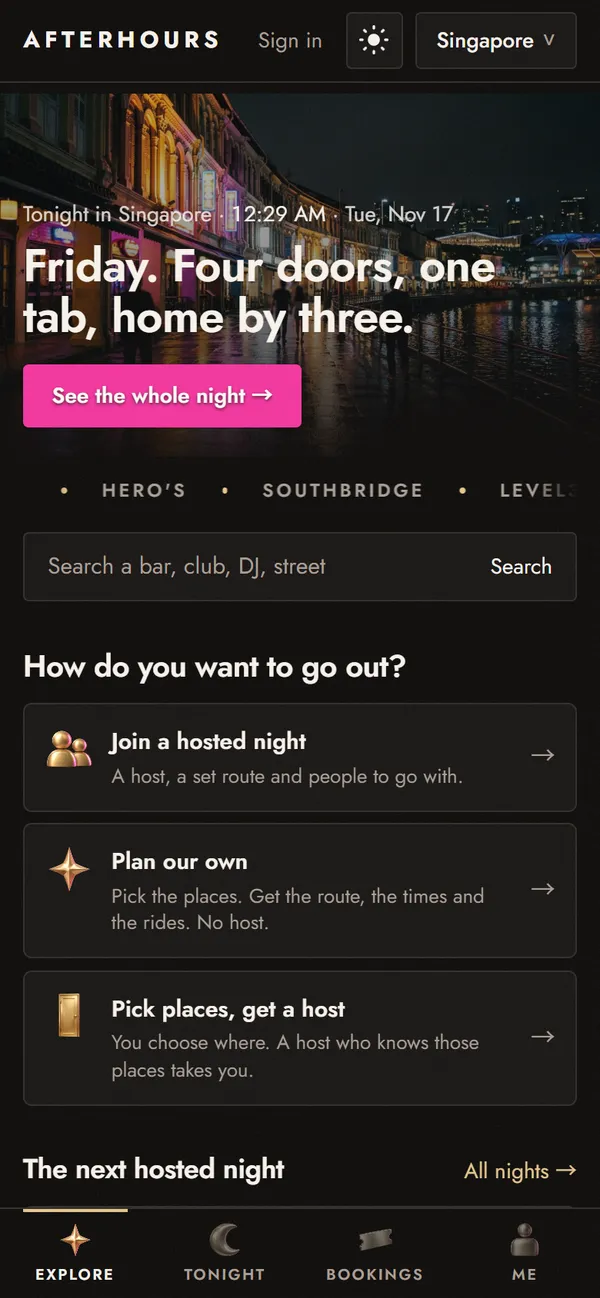
The design system is small and strict. A warm near-black, not a cold one. One magenta, the colour of a sign over a door, allowed on one primary action per screen. Champagne only for arrival: paid, verified, checked in. Mint only for anything live or on duty. One typeface, and custom filled icons instead of outlines.
Then three layouts, not one stretched: phone, open foldable, and desktop with a left rail. My rule was that desktop had to be designed, not a phone column in the middle of a monitor.
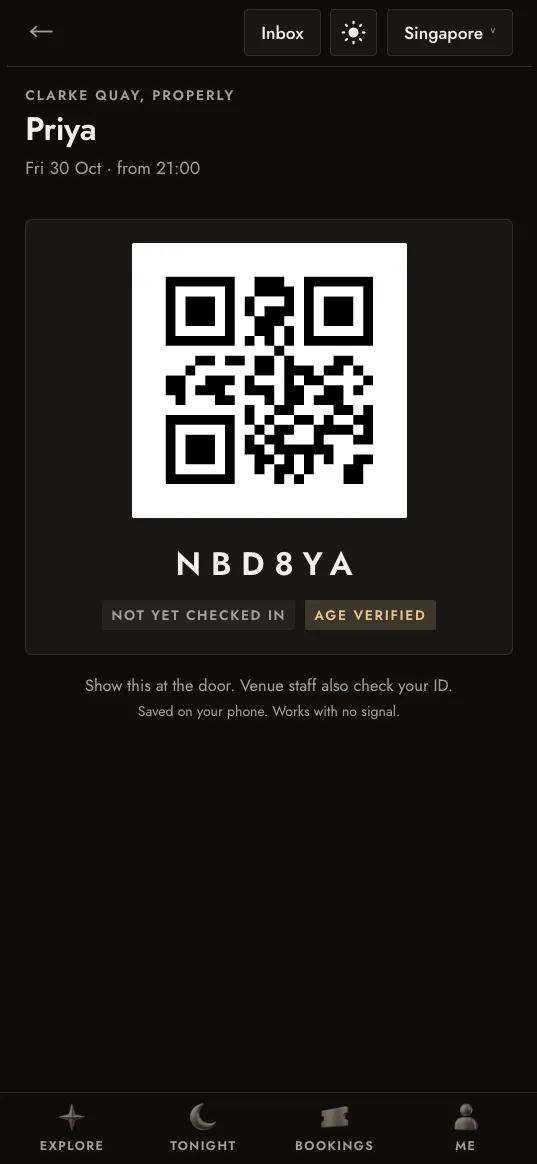
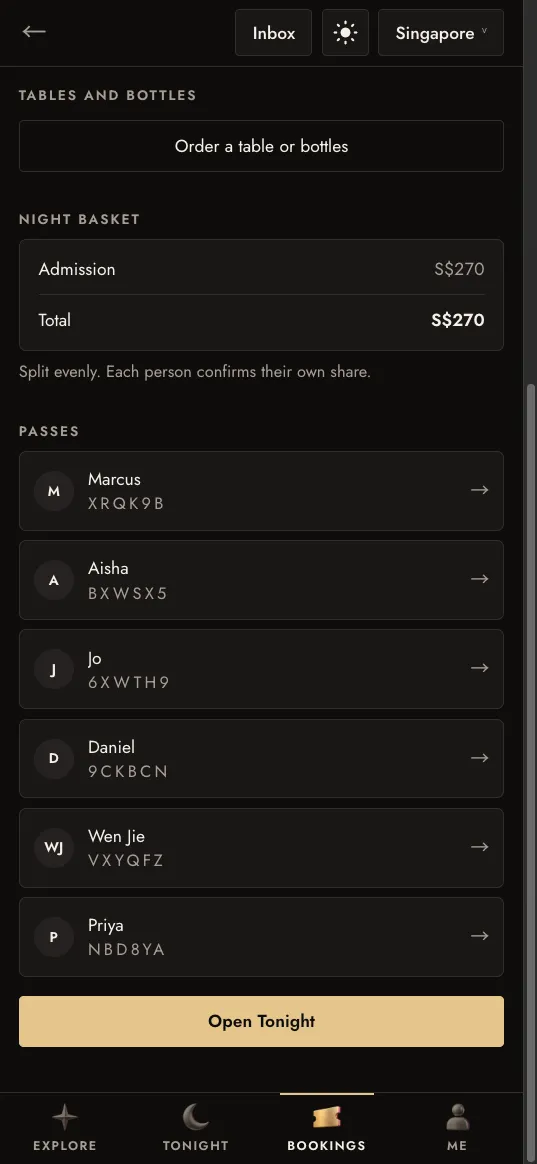
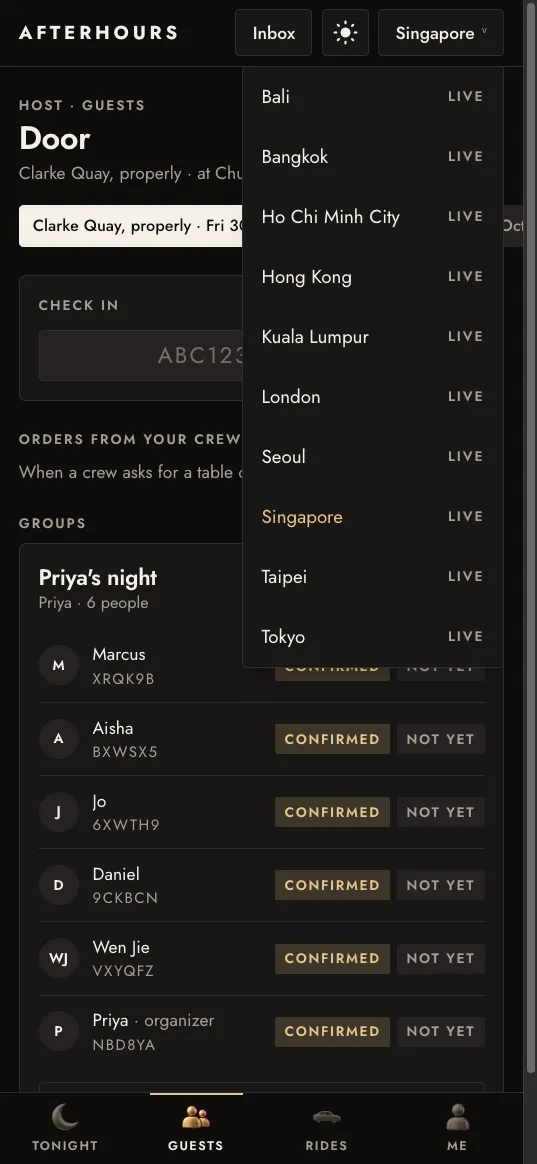
Phone
Foldable
Key decisions
Informative is not the same as motivating.
Decision 01
Rework booking so it asks for a decision.
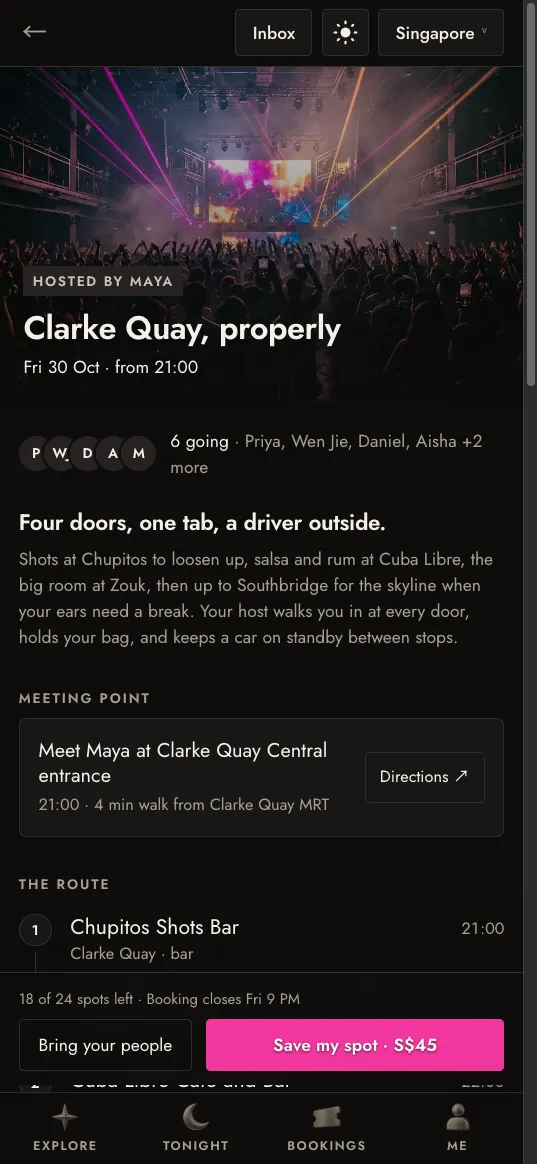
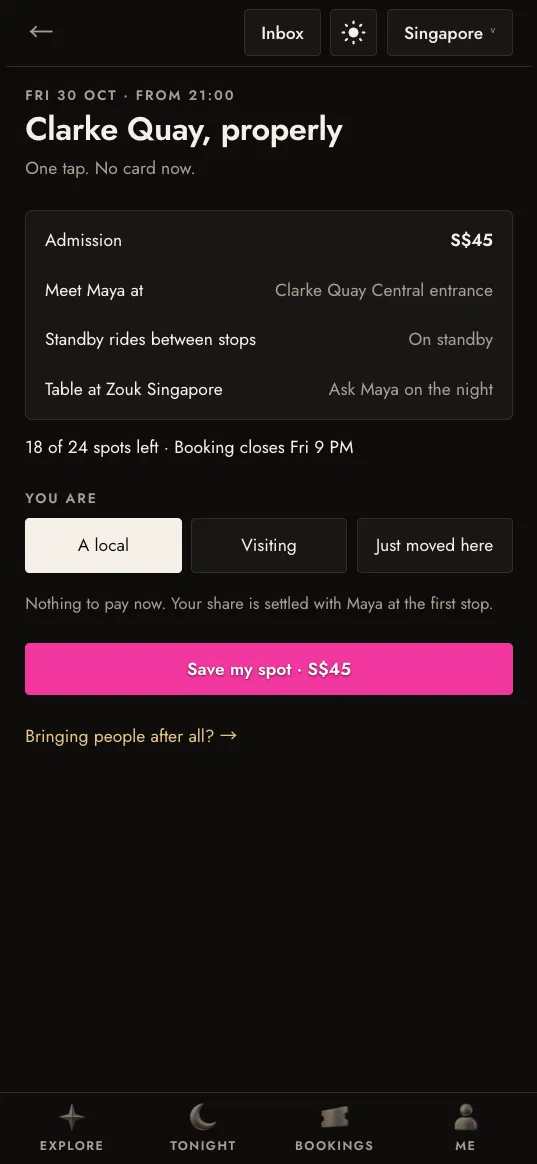
Two days before the deadline I opened the live app as a guest and wrote down my verdict: it was informative, and I was not motivated to book. Everything a guest needed to know was there. Nothing asked them to commit.
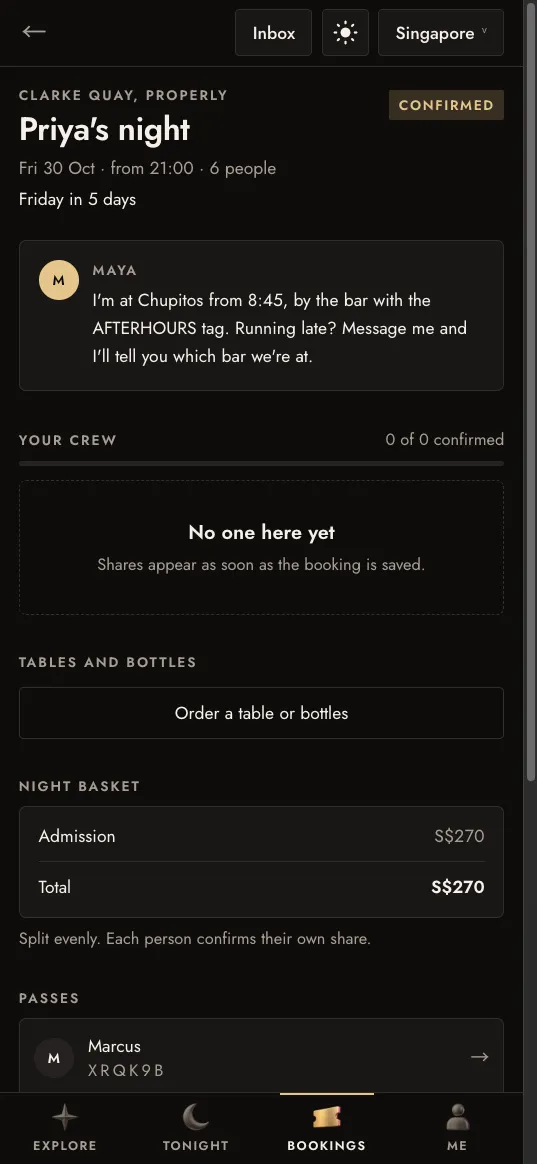
I listed eight leaks. Among them: nothing asked for a decision, capacity was never shown, there was no sign anyone else was going, the first step asked for friends’ emails before anything was saved, and the payment line read like a prototype notice. I fixed them in two rounds.
The booking hub now leads with sending the night to the group chat, and the host introduces the night in the first person. A day after these captures, the prices came off the buttons, because the seeded per-person amounts were placeholders. The buttons now read Join this night and Confirm my spot.
Night
Confirm
Hub
Decision 02
Track where people leave, not everything they do.
I wanted to know where a visitor gave up: which page, which button. A session recorder answers that by recording everything, so I replaced it with something narrower.
Exit tracking keeps the page someone left from, the visible label of the last thing they tapped, the path that led there, how long it took, the device, and whether they were signed in. It keeps no recordings and no form values. A second version added dead ends (leaving within five seconds of a tap) and finished-or-not counts for booking, joining a crew and signing up. My own visits are filtered out.
Decision 03
Review it like an attacker, then test every button.
The first security review, on deadline day, found 22 issues, mostly write rules that were too open and contact details that were visible. After the fixes, anonymous reads of driver and host emails went from 21 and 20 records to none. The second review, on 5 November, found ten, and all ten were fixed and published the same day. Host vetting, driver approval and age-verified passes moved to the server, ID documents and photos moved to private storage, and the site gained a content security policy.
The next day I checked every page, button and backend function: 47 routes and 35 functions. The first round of fixes went live that day, including real error messages in place of status codes, chat times that were off by a time zone, and prices that reverted on save. A second round the same day fixed crew visibility, host cancellation, notifications and the Thai copy.
What shipped
Ten cities, four sides, one night.
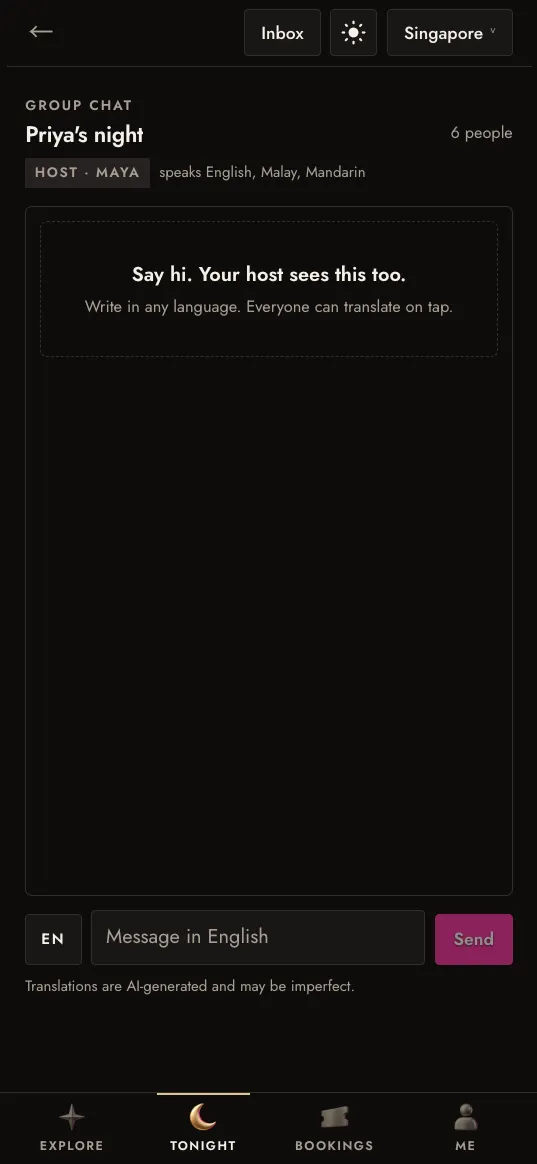
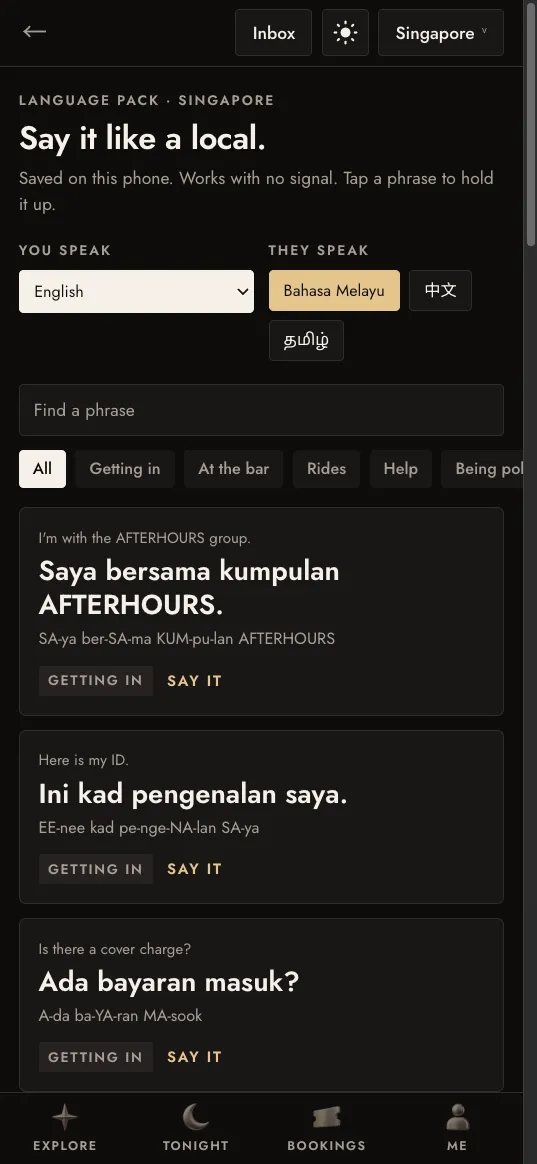
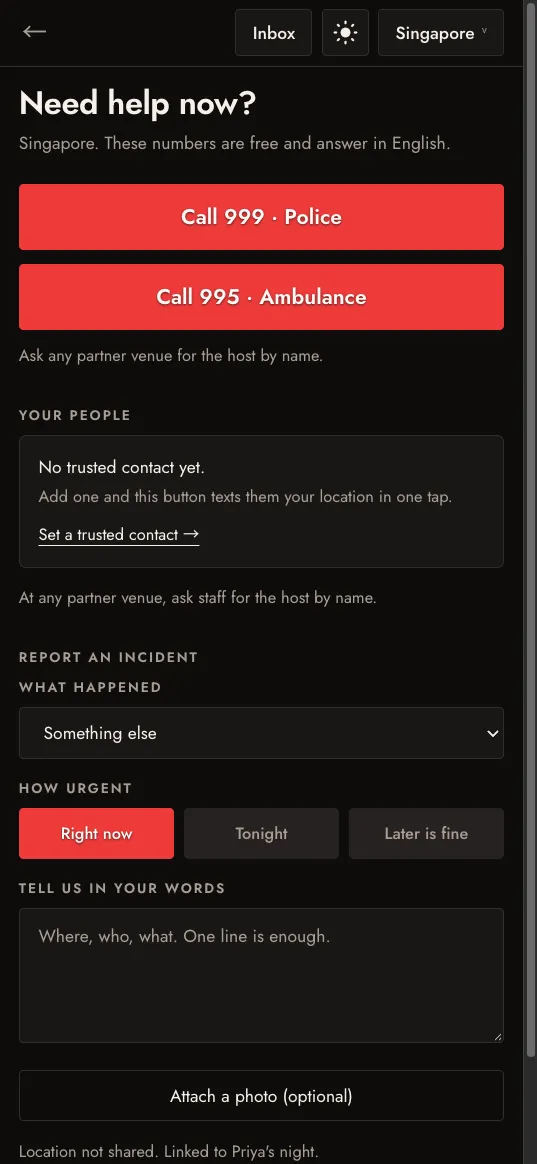
Booking for a hosted night or a night you plan yourself, digital passes with QR check-in, a group chat that translates on tap, a phrasebook for each city, bag check with the host, live driver dispatch, a help screen with local emergency numbers, and an admin console for each city. Phone, foldable and desktop each have their own layout.
Results
Live, in ten cities.
284 commits between 20 October and 16 November.
- cities live, including Singapore, Tokyo, Seoul and London
- 10
- cities live, including Singapore, Tokyo, Seoul and London
- real venues and 855 events, from OpenStreetMap, Resident Advisor and Eventbrite
- 5,300
- real venues and 855 events, from OpenStreetMap, Resident Advisor and Eventbrite
- languages, from Malay and Tamil to Portuguese and Russian
- 17
- languages, from Malay and Tamil to Portuguese and Russian
What I would do next
- 01Take payments in the app. Shares are still confirmed by hand with the host.
- 02Turn on push notifications. The code is in place; delivery has not been verified.
- 03Replace the seeded prices with real ones from venues and hosts.
- 04Build pre-booked rides, the third phase of the driver plan.
- 05Ship a store build, for push and background location.